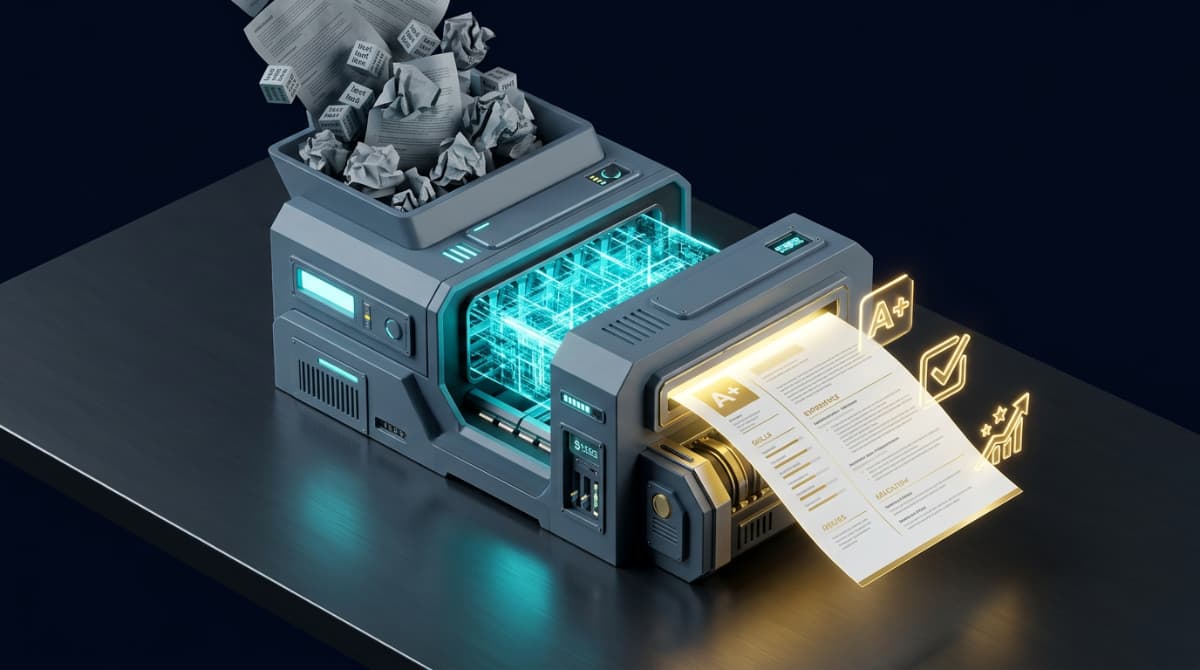
Crafting a compelling resume in today's competitive job market requires understanding both human recruiters and the automated systems that often screen applications first: Applicant Tracking Systems (ATS). These systems scan resumes for specific keywords and formatting elements, and if your resume doesn't meet the criteria, it might never reach a human. Fortunately, AI can help you optimize your resume to be both ATS-friendly and appealing to recruiters. This guide walks you through the process. Let's get started!
Understanding ATS and Why It Matters
Applicant Tracking Systems (ATS) are software applications used by companies to manage the entire recruitment process, from posting job openings to tracking applicants. They automatically filter resumes based on predefined criteria, such as keywords, skills, experience, and education. A resume that isn't properly optimized for ATS may be automatically rejected, even if the candidate is highly qualified. Think of it as a gatekeeper; your resume needs the right "passcode" to get through.
Here's why understanding ATS is crucial:
- Increased Efficiency for Recruiters: ATS helps recruiters manage a high volume of applications quickly and efficiently.
- Keyword-Based Screening: Resumes are scanned for specific keywords related to the job description.
- Formatting Sensitivity: ATS can struggle with complex formatting, potentially misinterpreting or omitting crucial information.
- Fairness and Compliance: ATS helps ensure a consistent and compliant screening process.
How AI Can Help You Beat the Bots
AI-powered tools can analyze job descriptions, identify key skills and keywords, and optimize your resume's content and formatting to increase its chances of passing through ATS. They can also provide valuable insights into how your resume stacks up against other applicants and suggest improvements to highlight your strengths. Using AI-Assisted Code Review: Improve Quality and Speed Up Development showed that AI can highlight areas of your existing workflow for improvement.
Here are some specific ways AI can enhance your resume:
- Keyword Optimization: AI can identify the most relevant keywords from job descriptions and suggest ways to incorporate them naturally into your resume.
- Content Enhancement: AI can help you rewrite your resume to highlight your achievements and quantify your results, making it more impactful.
- Formatting Review: AI can analyze your resume's formatting to ensure it's ATS-friendly and visually appealing.
- Skill Gap Analysis: AI can identify any skills gaps between your resume and the job requirements, allowing you to address them proactively.
Step-by-Step Guide to Crafting an ATS-Friendly Resume with AI
Here's a step-by-step guide to creating a resume that not only gets past the ATS but also impresses human recruiters:
- Analyze the Job Description: Carefully review the job description for keywords, skills, and experience requirements. Pay attention to the specific language used by the employer.
- Use an AI Resume Builder: Leverage AI resume builders to get the most out of your resume. Start by inputting your existing resume (if you have one) or creating a new one from scratch. These tools typically offer templates and suggestions for content and formatting.
- Keyword Optimization with AI: Use the AI tool to identify relevant keywords from the job description and incorporate them naturally into your resume. Avoid keyword stuffing, as this can be penalized by both ATS and human recruiters.
- Quantify Your Achievements: Use AI to help you quantify your achievements whenever possible. For example, instead of saying "Managed social media accounts," say "Managed social media accounts, increasing followers by 30% in six months."
- Choose an ATS-Friendly Template: Select a clean and simple resume template that is easy for ATS to parse. Avoid using tables, graphics, or unusual fonts, as these can sometimes cause issues.
- Review and Edit: Once you've made the necessary changes, review your resume carefully for any errors or inconsistencies. Proofread it thoroughly to ensure it's free of typos and grammatical mistakes.
- Test Your Resume: Use an ATS resume scanner to test your resume's compatibility with ATS. These scanners can identify any potential issues and suggest improvements. Many AI resume tools include this feature.
Actionable Asset: ATS Resume Checklist
Use this checklist to ensure your resume is ATS-friendly:
- Clear and concise language
- Relevant keywords incorporated naturally
- Quantifiable achievements
- Simple, ATS-friendly formatting
- No tables, graphics, or unusual fonts
- Consistent formatting throughout
- Correct grammar and spelling
Examples and Use Cases
Here are a few examples of how you can use AI to improve your resume:
- Entry-Level Candidate: An entry-level candidate can use AI to identify transferable skills from their academic and extracurricular experiences and highlight them in their resume.
- Mid-Career Professional: A mid-career professional can use AI to showcase their accomplishments and demonstrate their impact on previous employers. They can also use AI to identify any skills gaps and highlight relevant training or certifications.
- Executive-Level Candidate: An executive-level candidate can use AI to create a compelling summary of their leadership experience and demonstrate their strategic thinking and business acumen. They can also use AI to tailor their resume to specific industry trends and challenges.
For example, imagine a job posting that emphasizes "data-driven decision making". An AI tool can help you revise your resume to demonstrate experience with data analysis, reporting, and A/B testing, even if those weren't the primary functions of your previous roles. This targeted approach will significantly improve your chances.
Choosing the Right AI Tools
When selecting AI tools to assist with resume creation, consider the following:
- Accuracy: The AI tool should be able to accurately identify relevant keywords and skills from job descriptions.
- Customization: The tool should allow you to customize your resume to match your specific needs and preferences.
- Ease of Use: The tool should be easy to use and navigate, even if you have limited experience with AI.
- ATS Compatibility: The tool should be able to create resumes that are compatible with a wide range of ATS.
Example tools to consider:
- AI-powered resume builders (many offer free trials).
- ATS resume scanners (can help identify potential issues).
- AI writing assistants (for improving your resume's content).
Consider trying a few different tools to see which one works best for you. If you're curious about the debate of AI Resume Builders vs. Human Experts: Which Wins?, check out this guide.
By following these steps and leveraging the power of AI, you can create a resume that not only gets past the ATS but also impresses human recruiters. Good luck with your job search!