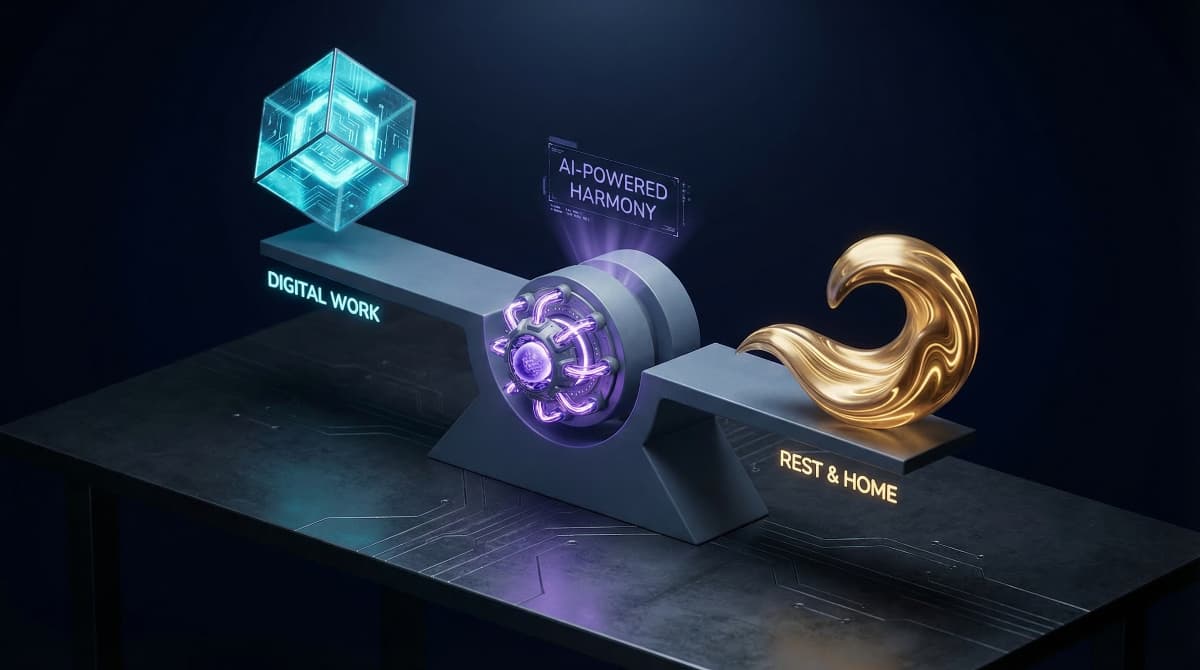
AI has revolutionized how we live and work, and its integration into smart homes is creating exciting possibilities for professionals seeking a better work-life balance. Imagine a home that anticipates your needs, manages your schedule, and provides a secure and comfortable environment, all while freeing up your time and mental energy to focus on what truly matters. This is the promise of the AI-driven smart home.
This article will explore how you can leverage AI in your smart home to optimize your productivity, reduce stress, and create a more harmonious living space. We'll cover everything from automating daily routines to enhancing security and managing energy consumption, giving you the tools and knowledge to transform your home into a haven that supports your professional and personal goals.
Whether you're a seasoned tech enthusiast or just beginning to explore the world of smart home technology, this guide will provide valuable insights and practical tips for creating an AI-powered smart home that truly enhances your life.
Understanding the AI Smart Home Ecosystem
At its core, an AI smart home uses artificial intelligence to automate tasks, learn your preferences, and optimize your home environment. This goes beyond simple remote control of devices; it involves intelligent systems that can adapt to your needs and anticipate your actions. Key components of this ecosystem include:
- Smart Devices: These are the individual components of your smart home, such as smart lights, thermostats, security cameras, and appliances. They're equipped with sensors and connectivity to communicate with each other and a central control system.
- Central Hub or Platform: This acts as the brain of your smart home, connecting all your devices and enabling them to work together. Popular options include Amazon Alexa, Google Assistant, and Apple HomeKit. These platforms often incorporate AI to personalize your experience and automate tasks.
- AI Algorithms: These are the software programs that analyze data from your smart devices, learn your patterns, and make intelligent decisions. For example, an AI algorithm might learn your preferred temperature settings and automatically adjust the thermostat to keep you comfortable.
- Connectivity: A reliable internet connection is essential for an AI smart home. This allows your devices to communicate with each other, access cloud-based services, and receive updates.
The key is to create a cohesive system where these components work together seamlessly to simplify your life and improve your work-life balance.
Benefits of an AI Smart Home for Work-Life Balance
An AI-powered smart home offers numerous benefits for busy professionals:
- Increased Productivity: Automate routine tasks to free up time and mental energy for more important tasks. Imagine never having to worry about setting the thermostat, turning off lights, or watering the lawn again. Check out AI-Powered Morning Routine: Automate Your Day for Peak Productivity for more on automating your mornings.
- Reduced Stress: Create a more relaxed and comfortable home environment. Smart lighting can create a calming ambiance, while automated blinds can help you wake up naturally.
- Improved Security: Enhance your home security with AI-powered surveillance systems. Smart cameras can detect suspicious activity and send alerts to your phone, giving you peace of mind when you're away. Read more about AI-Powered Smart Home Security: Enhancing Your Home Safety.
- Energy Savings: Optimize your energy consumption with smart thermostats and lighting systems. AI can learn your usage patterns and automatically adjust settings to minimize waste and save money. If you're interested, dive into Smart Home Energy Management with AI: Save Money, Go Green.
- Enhanced Convenience: Control your home from anywhere with your smartphone or voice assistant. You can turn on lights, adjust the temperature, or lock the doors, no matter where you are.
By automating tasks and providing you with greater control over your home environment, an AI smart home can help you reclaim valuable time and energy, allowing you to focus on your work and personal life.
Use Cases: AI Smart Home in Action
Here are a few examples of how you can use AI in your smart home to improve your work-life balance:
- Automated Lighting: Use smart lights to create different scenes for work and relaxation. For example, you can have bright, focused lighting for work and dim, warm lighting for evenings. AI can even learn your preferred lighting settings for different times of day and automatically adjust the lights accordingly.
- Smart Thermostat: Set your thermostat to automatically adjust the temperature based on your schedule. You can have it lower the temperature when you're at work and raise it when you're coming home. Some AI thermostats can even learn your preferred temperature settings for different times of day and adjust the temperature accordingly.
- Voice-Activated Assistants: Use voice assistants like Amazon Alexa or Google Assistant to control your smart home devices, set reminders, and manage your schedule. You can also use them to play music, make calls, or even order groceries.
- Smart Security Systems: Install smart security cameras and doorbells to monitor your home remotely. AI can be used to detect suspicious activity and send alerts to your phone. You can also use smart locks to remotely lock or unlock your doors.
Example tools to consider: SmartThings, Nest, Ring, Philips Hue.
Advanced Use Case: Dynamic Lighting for Circadian Rhythm
Take your smart lighting to the next level by syncing it with your circadian rhythm. AI can analyze your sleep patterns and adjust the color temperature of your lights throughout the day to help you feel more energized during the day and more relaxed at night. This can improve your sleep quality and overall well-being.
Step-by-Step Implementation Guide: Creating Your AI Smart Home
Ready to transform your home into an AI-powered oasis? Here's a step-by-step guide to get you started:
- Assess Your Needs and Goals: Before you start buying smart devices, take some time to identify your specific needs and goals. What tasks do you want to automate? What areas of your home do you want to improve? What are your biggest pain points in terms of work-life balance?
- Choose a Central Hub: Select a central hub or platform that is compatible with the devices you want to use. Consider factors such as ease of use, compatibility with other devices, and privacy features.
- Start Small and Expand Gradually: Don't try to automate everything at once. Start with a few key devices or areas of your home and gradually expand your smart home ecosystem as you become more comfortable. This will help you avoid feeling overwhelmed and ensure that you're making smart investments.
- Integrate and Automate: Once you have your smart devices set up, start integrating them with your central hub and creating automations. This is where the real power of an AI smart home comes into play. Experiment with different automations to find what works best for you.
- Prioritize Security: Securing your smart home network is crucial. Use strong passwords, enable two-factor authentication, and keep your devices updated with the latest security patches. Consider using a separate network for your IoT devices to isolate them from your main network.
Example Template for Identifying Automation Opportunities
| Task | Current Process | Pain Points | Potential Automation Solution | Benefits |
|---|---|---|---|---|
| Adjusting Thermostat | Manually adjusting throughout the day | Inconsistent temperature, energy waste | Smart thermostat with AI learning | Consistent temperature, energy savings |
| Turning Lights On/Off | Manually switching lights as needed | Forgetting to turn off lights, wasted energy | Smart lighting with motion sensors and schedules | Energy savings, convenience |
| Home Security | Relying on traditional locks and visual checks | Lack of remote monitoring, security concerns | AI-powered security cameras and smart locks | Enhanced security, peace of mind |
| Watering Plants | Manually watering based on schedule | Forgetting, over/under watering | Smart watering system with soil sensors | Healthy plants, water conservation |
Conclusion
An AI-driven smart home offers a powerful way to improve your work-life balance. By automating tasks, enhancing security, and optimizing your home environment, you can free up time and energy to focus on what truly matters. Start small, experiment with different automations, and enjoy the benefits of a more connected and intelligent home.