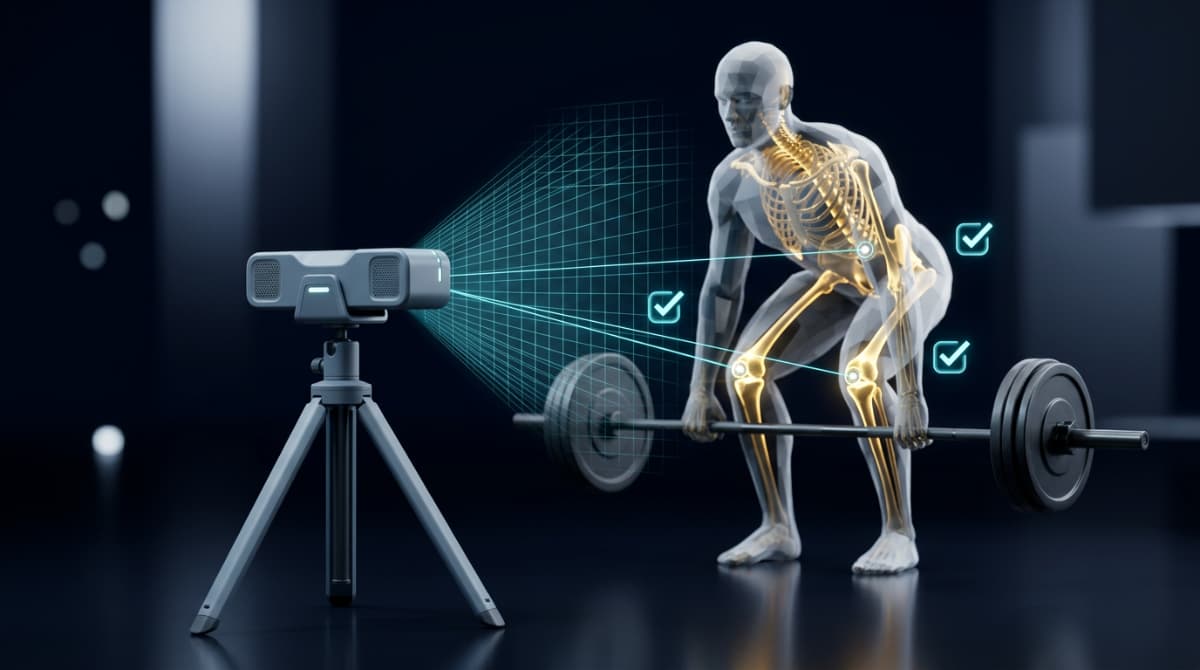
Imagine having a personal trainer who never tires, always knows the right form, and can instantly correct your mistakes. That's the promise of AI-powered form correction. Using sophisticated algorithms and computer vision, these tools analyze your movements in real-time, providing immediate feedback to improve your exercise technique and minimize the risk of injury. This technology is no longer a futuristic fantasy; it's here and accessible to anyone with a smartphone or webcam.
Whether you're a seasoned athlete or just starting your fitness journey, AI form correction can revolutionize the way you exercise. It offers personalized guidance, helping you optimize your workouts and achieve your fitness goals more efficiently. Let's explore how you can leverage AI to enhance your exercise technique and unlock your full potential.
What is AI Form Correction?
AI form correction uses artificial intelligence, particularly computer vision and machine learning, to analyze human movement during exercise. Here’s a breakdown of the core concepts:
- Computer Vision: This AI field enables computers to "see" and interpret images and videos. In the context of exercise, computer vision analyzes video footage of your movements to identify key joints and body positions.
- Pose Estimation: Algorithms estimate the 2D or 3D pose of a person from an image or video. This involves identifying the location of key body parts (e.g., elbows, knees, hips) and tracking their movement over time.
- Machine Learning: AI models are trained on vast datasets of correct and incorrect exercise forms. By analyzing these datasets, the AI learns to recognize patterns and identify deviations from optimal technique.
- Real-time Feedback: Based on the analysis, AI systems provide immediate feedback, either visually (e.g., highlighting areas for improvement on a video) or audibly (e.g., voice prompts).
This technology goes beyond simply counting reps. It offers a deeper understanding of how you're moving, allowing for precise corrections that can significantly improve your workout effectiveness and safety.
Why Use AI for Exercise Form Correction?
There are many compelling reasons to incorporate AI form correction into your fitness routine:
- Injury Prevention: Incorrect form is a leading cause of exercise-related injuries. AI can identify and correct these errors before they lead to pain or long-term damage.
- Improved Performance: Proper form maximizes muscle activation and efficiency. AI can help you optimize your technique for better results.
- Personalized Guidance: AI provides individualized feedback based on your unique body mechanics and fitness level. This is much more effective than generic workout advice.
- Accessibility: AI-powered tools are often more affordable and accessible than traditional personal trainers. You can get expert guidance anytime, anywhere.
- Objective Assessment: AI provides an unbiased assessment of your form, eliminating the subjectivity that can sometimes occur with human trainers.
- Motivation: Seeing real-time progress and receiving positive feedback can be highly motivating, helping you stay consistent with your fitness goals. You can use AI-powered insights to inform your AI-Powered Goal Setting for faster achievement.
Examples of AI Form Correction in Action
AI form correction can be applied to a wide variety of exercises and fitness activities. Here are some concrete examples:
- Weightlifting: AI can analyze your squat, deadlift, and bench press form, ensuring proper spinal alignment, joint angles, and muscle engagement. This can help you lift heavier weights safely and effectively.
- Yoga: AI can guide you through yoga poses, correcting your alignment and preventing strain. This is especially helpful for beginners who may not be aware of proper technique.
- Running: AI can analyze your stride length, foot strike, and posture, helping you improve your running efficiency and reduce the risk of injuries like shin splints or runner's knee.
- Bodyweight Exercises: AI can provide feedback on exercises like push-ups, planks, and lunges, ensuring you're maintaining proper form and engaging the correct muscles.
- Rehabilitation: AI can assist with physical therapy exercises, guiding you through movements and providing feedback on range of motion and stability. This can help you recover from injuries more quickly and effectively.
Use Cases for Different Experience Levels:
- Beginner: Start with basic exercises and focus on mastering fundamental form. Use AI to identify and correct major errors. For example, focus on squat depth and back alignment.
- Intermediate: Refine your technique on more complex exercises. Use AI to optimize muscle engagement and identify subtle imbalances. For example, ensuring equal weight distribution during lunges.
- Advanced: Use AI to analyze your form during high-intensity workouts and identify areas for improvement in speed, power, and efficiency. For example, optimizing jumping form for maximum vertical leap.
How to Choose an AI Form Correction Tool
With a growing number of AI form correction tools available, it's important to choose one that meets your specific needs and preferences. Here are some factors to consider:
- Exercise Coverage: Does the tool support the exercises you're interested in?
- Accuracy: How accurate is the AI in identifying and correcting form errors? Look for tools that have been validated by experts.
- Real-time Feedback: Does the tool provide real-time feedback, or does it require you to record and upload videos?
- Ease of Use: Is the tool user-friendly and easy to navigate?
- Platform Compatibility: Is the tool compatible with your devices (e.g., smartphone, tablet, computer)?
- Cost: What is the pricing model (e.g., subscription, one-time purchase)?
- Data Privacy: How does the tool handle your data? Make sure it has a clear and transparent privacy policy. Consider how AI can help optimize your AI Nutrition and create AI Fitness plans.
Example tools to consider:
- Mobile apps that use your phone's camera.
- Web-based platforms that use your computer's webcam.
- Wearable sensors that track your movement.
Step-by-Step Implementation Guide: Getting Started with AI Form Correction
Ready to start using AI to improve your exercise technique? Follow these steps:
- Choose an AI Form Correction Tool: Research and select a tool that aligns with your fitness goals, budget, and technical capabilities. Consider free trials to test different options before committing to a subscription. Make sure it works with your existing AI Fitness: Generate Personalized Workout Plans Effortlessly.
- Set Up Your Environment: Ensure you have adequate lighting and a clear view of your body during exercise. Position your camera or device so that the AI can accurately track your movements.
- Start with a Baseline Assessment: Perform a few repetitions of your chosen exercise while the AI analyzes your form. Pay attention to the initial feedback and identify areas where you need to improve.
- Focus on One Correction at a Time: Don't try to fix everything at once. Focus on one specific aspect of your form and make small, incremental adjustments. For example, if you're squatting, focus on maintaining a neutral spine.
- Practice with Real-time Feedback: As you continue to exercise, pay close attention to the real-time feedback provided by the AI. Adjust your movements accordingly until you achieve the desired form.
- Track Your Progress: Monitor your performance over time and note any improvements in your form, strength, or endurance. This will help you stay motivated and track your progress towards your fitness goals.
- Consult with a Professional: If you have any concerns or questions about your form, consult with a qualified personal trainer or physical therapist. They can provide personalized guidance and ensure you're exercising safely and effectively.
By following these steps, you can leverage the power of AI to transform your exercise routine and achieve your fitness aspirations. Embrace the future of fitness and unlock your full potential with AI-powered form correction.